HEPA vacuuming and microfiber wiping are the two most effective methods for removing fine dust from vents and interior surfaces. HEPA filtration captures airborne particles at the source, while microfiber traps settled dust through static charge. This guide explains how each method works, when to use them, and how Clean Connect Pros applies both techniques to deliver a deeper clean across the DMV and Central Virginia. For additional details, review the .
HEPA Vacuuming for Airborne Dust
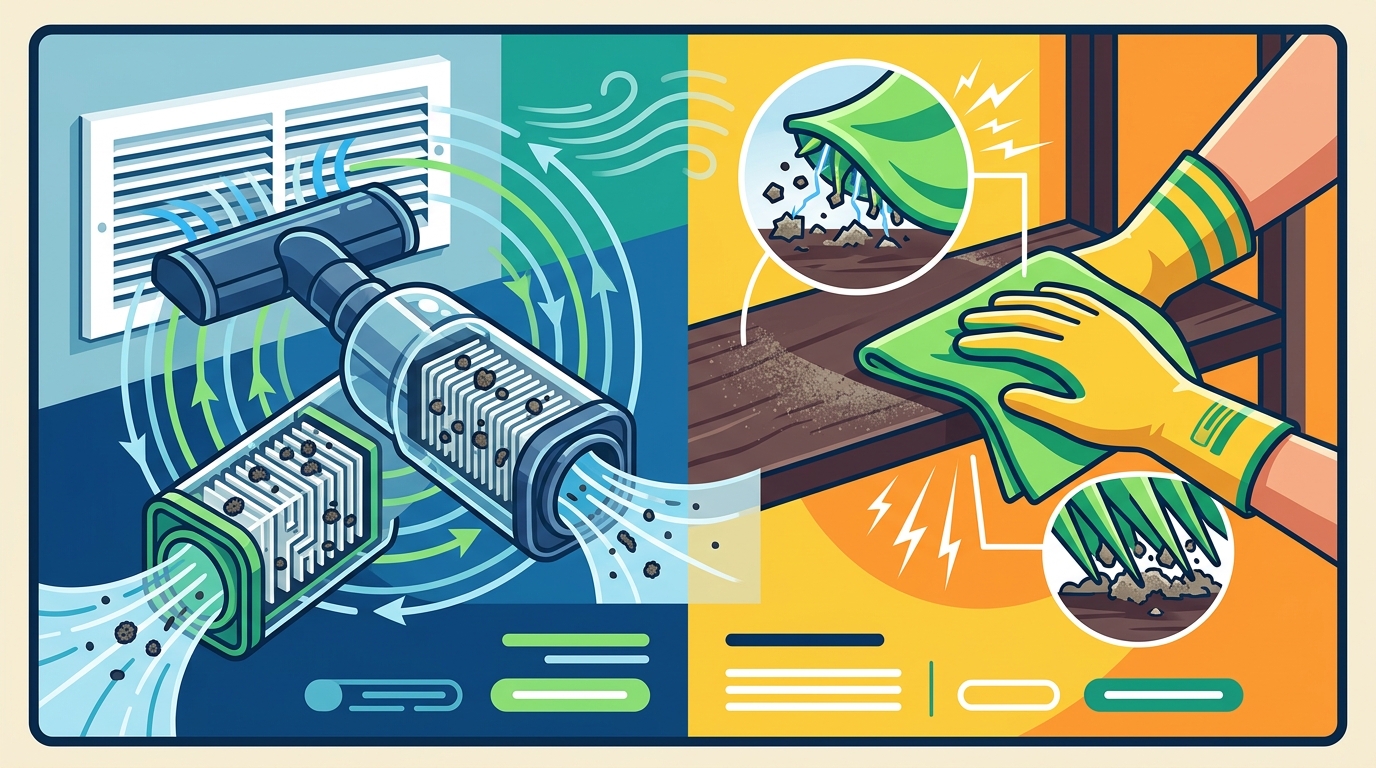
HEPA vacuuming is the primary method for removing fine dust that remains suspended in the air or lodged in hard-to-reach areas like vents, grilles, and behind furniture. High-Efficiency Particulate Air (HEPA) filters are designed to capture at least 99.97% of particles as small as 0.3 microns. This standard is critical because fine dust, including pollen, pet dander, and mold spores, often falls within this size range. Without proper filtration, standard vacuums can expel these microscopic particles back into the room, effectively redistributing the dust rather than removing it. For additional details, review the Customer Experience.
How HEPA Filters Work in Vents
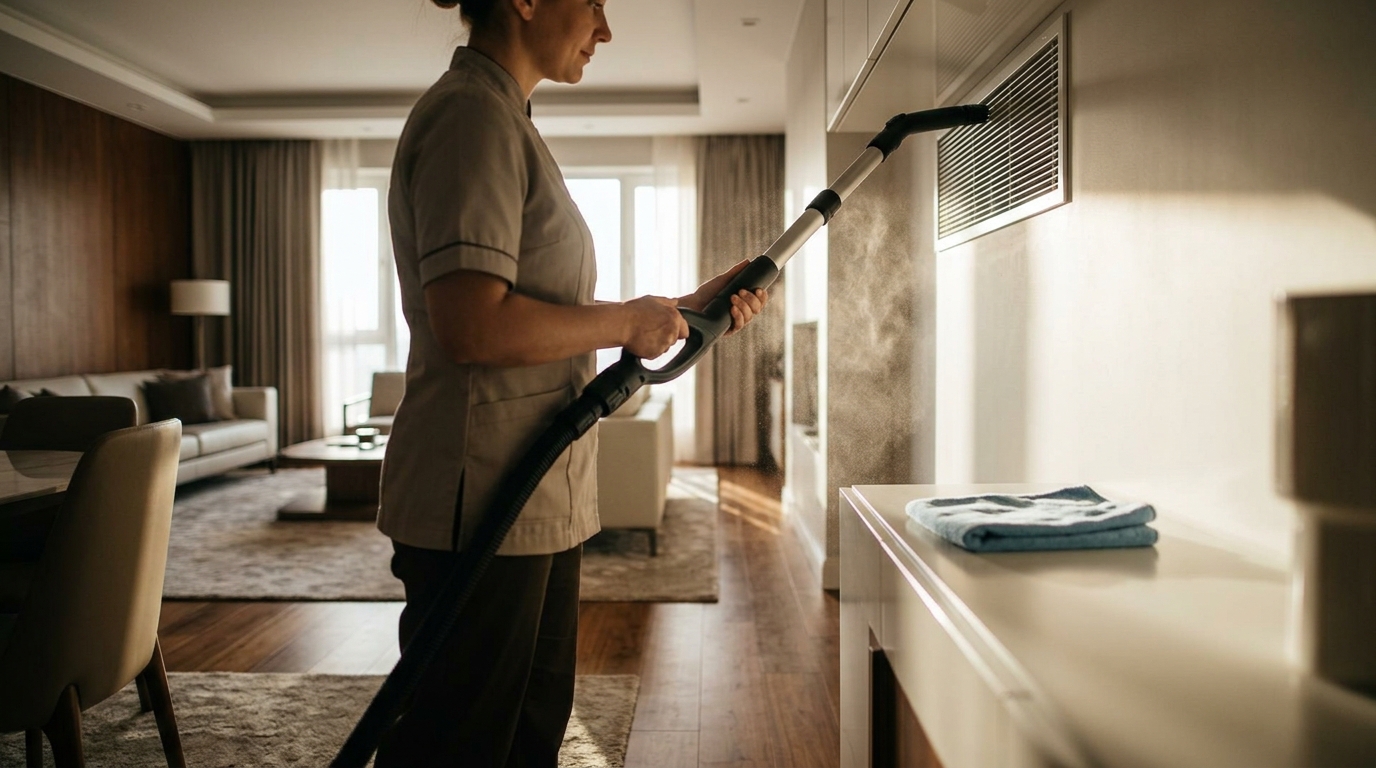
Vents and HVAC registers are common reservoirs for fine dust. When air circulates through a home, particles settle on the metal grilles and inside the ductwork. A standard vacuum nozzle often lacks the suction power or filtration capability to remove this dust without blowing it into the surrounding air. HEPA-equipped vacuums use a sealed system that prevents air from escaping through the motor or seams. This containment ensures that the dust is trapped inside the canister or bag, where it cannot re-enter the living space. For vents, using a HEPA vacuum with a soft brush attachment allows for gentle agitation that lifts dust off the surface while the filter captures it immediately. For additional details, review the Frequently Asked Questions.
Why Standard Vacuums Fall Short
Many household vacuums use basic paper or foam filters that are not rated for microscopic particles. These filters may capture larger debris like hair or crumbs, but they allow fine dust to pass through. Over time, this leads to a cycle where the home feels clean on the surface but remains dusty in the air. Clean Connect Pros utilizes professional-grade equipment with certified HEPA filtration to address this issue. By ensuring that the vacuum system is fully sealed and the filter is intact, our team prevents the re-emission of allergens. This approach is particularly important in the DMV region, where seasonal pollen counts and urban particulate matter can elevate indoor dust levels significantly. For additional details, review the About.
Microfiber Wiping for Settled Dust
Microfiber wiping is the most effective method for removing dust that has already settled on flat or textured interior surfaces. Microfiber is a synthetic fabric made from extremely fine strands of polyester and polyamide. These strands are thinner than a human hair, creating a high surface area that traps dust, dirt, and allergens through static electricity and mechanical entanglement. Unlike cotton cloths, which can push dust around or leave lint behind, microfiber lifts particles off the surface and holds them securely within the fabric weave. This makes it ideal for wiping down baseboards, window sills, light fixtures, and electronic equipment.
The Science of Static Charge
The effectiveness of microfiber relies on its ability to generate a static charge when rubbed against a surface. This charge attracts neutral dust particles, pulling them away from the surface and into the fabric. Because the fibers are so fine, they can reach into crevices and textured areas that larger cloths cannot access. For example, the grooves in a wooden baseboard or the keys of a keyboard are difficult to clean with a standard rag. Microfiber wipes can navigate these spaces, trapping dust in the tight weave. This method is non-abrasive, making it safe for delicate surfaces like glass, polished wood, and painted walls.
Proper Technique for Interior Surfaces
Method Comparison Table
Choosing between HEPA vacuuming and microfiber wiping depends on the state of the dust and the type of surface. The following table summarizes the key differences between the two methods.
| Primary Target | Airborne dust, vents, carpets, upholstery | Settled dust on flat, hard, or textured surfaces |
| Particle Capture Mechanism | Filtration (99.97% at 0.3 microns) | Static charge and mechanical entanglement |
| Best For | HVAC vents, rugs, sofas, deep cleaning | Baseboards, windows, electronics, walls |
| Risk of Re-emission | Low if system is sealed and filter is intact | None (dust is trapped in fabric) |
| Maintenance | Empty canister or replace filter regularly | Wash cloths after each use |
Both methods are complementary. A thorough cleaning session typically involves vacuuming first to remove loose debris and airborne particles, followed by microfiber wiping to address settled dust on surfaces. This two-step approach ensures that no dust is left behind, whether it is floating in the air or resting on a shelf.
Key Takeaways
- HEPA vacuuming is essential for removing airborne dust and cleaning vents, capturing 99.97% of particles down to 0.3 microns.
- Microfiber wiping is superior for settled dust on interior surfaces, using static charge to trap particles without pushing them around.
- Standard vacuums can re-emit fine dust if they lack sealed HEPA filtration, making them less effective for allergy sufferers.
- Microfiber cloths should be washed after each use to remove trapped dust and maintain their static charge capability.
- Combining both methods provides a comprehensive clean, addressing both airborne and settled dust in a single session.
- Color-coded microfiber cloths help prevent cross-contamination between different areas of a home, enhancing hygiene.
- Professional cleaning services like Clean Connect Pros use certified equipment and protocols to ensure consistent, high-quality results.
- Regular maintenance of HVAC filters and vents is crucial for reducing overall indoor dust levels in the DMV region.
Frequently Asked Questions
What is the difference between HEPA and standard vacuum filters?
HEPA filters are designed to capture at least 99.97% of particles as small as 0.3 microns, while standard filters may only capture larger debris. HEPA filters are critical for removing fine dust, pollen, and allergens from the air, whereas standard filters often allow these microscopic particles to pass through and re-enter the room.
Can I use microfiber cloths for both dusting and cleaning?
Yes, but the technique differs. For dusting, use a dry microfiber cloth to trap particles via static charge. For cleaning sticky or greasy surfaces, dampen the cloth with a suitable cleaner. Always wash microfiber cloths after use to remove trapped dust and restore their effectiveness.
How often should I vacuum vents with a HEPA vacuum?
It is recommended to vacuum vents and HVAC registers every 3 to 6 months, depending on the level of dust in your home. If you have pets or live in a high-pollen area like the DMV region, more frequent cleaning may be necessary to prevent dust buildup and maintain air quality.
Why do standard vacuums sometimes make dust worse?
Standard vacuums often lack a fully sealed system and certified HEPA filtration. This means that fine dust particles can escape through the motor or seams and be expelled back into the air. HEPA vacuums prevent this by trapping all particles inside the canister or bag, ensuring that the air leaving the vacuum is clean.
Is microfiber safe for all surfaces?
Microfiber is generally safe for most surfaces, including glass, wood, and painted walls, because it is non-abrasive. However, it is important to use the correct type of microfiber for the task. For example, cloths used for bathrooms should not be used on kitchen counters to prevent cross-contamination. Always check the manufacturer's recommendations for specific surface types.
How does Clean Connect Pros handle dust removal in the DMV region?
Do I need to replace HEPA filters regularly?
Yes, HEPA filters should be replaced or cleaned according to the manufacturer's instructions. A clogged filter reduces suction power and can allow dust to escape. For professional cleaning services, filters are inspected and replaced as needed to ensure optimal performance and air quality.
What is the best way to clean dust from behind furniture?
Use a HEPA vacuum with a long, flexible hose and a soft brush attachment to reach behind furniture. This allows you to agitate the dust and capture it without pushing it into the air. Follow up with a microfiber cloth to wipe down any visible dust on the furniture legs and surrounding floor area.
Conclusion
Effectively removing fine dust from vents and interior surfaces requires a combination of HEPA vacuuming and microfiber wiping. HEPA filtration captures airborne particles at the source, while microfiber traps settled dust through static charge. By understanding the strengths of each method, you can create a cleaning routine that addresses both visible and invisible dust. Clean Connect Pros brings this expertise to homes and businesses across the DMV and Central Virginia, ensuring that every space is not just clean, but truly dust-free. For a deeper clean that prioritizes air quality and surface hygiene, contact Clean Connect Pros to schedule a service today.