HEPA vacuuming is the most effective method for removing fine dust from vents and interior surfaces because it traps particles at the source. Microfiber wiping is the superior choice for flat, non-porous surfaces where dust settles. This guide explains how to combine both methods for a truly dust-free home or office in the DMV and Central Virginia region. For additional details, review the .
HEPA Vacuuming for Vents and Porous Surfaces
Why Vents Require HEPA Filtration
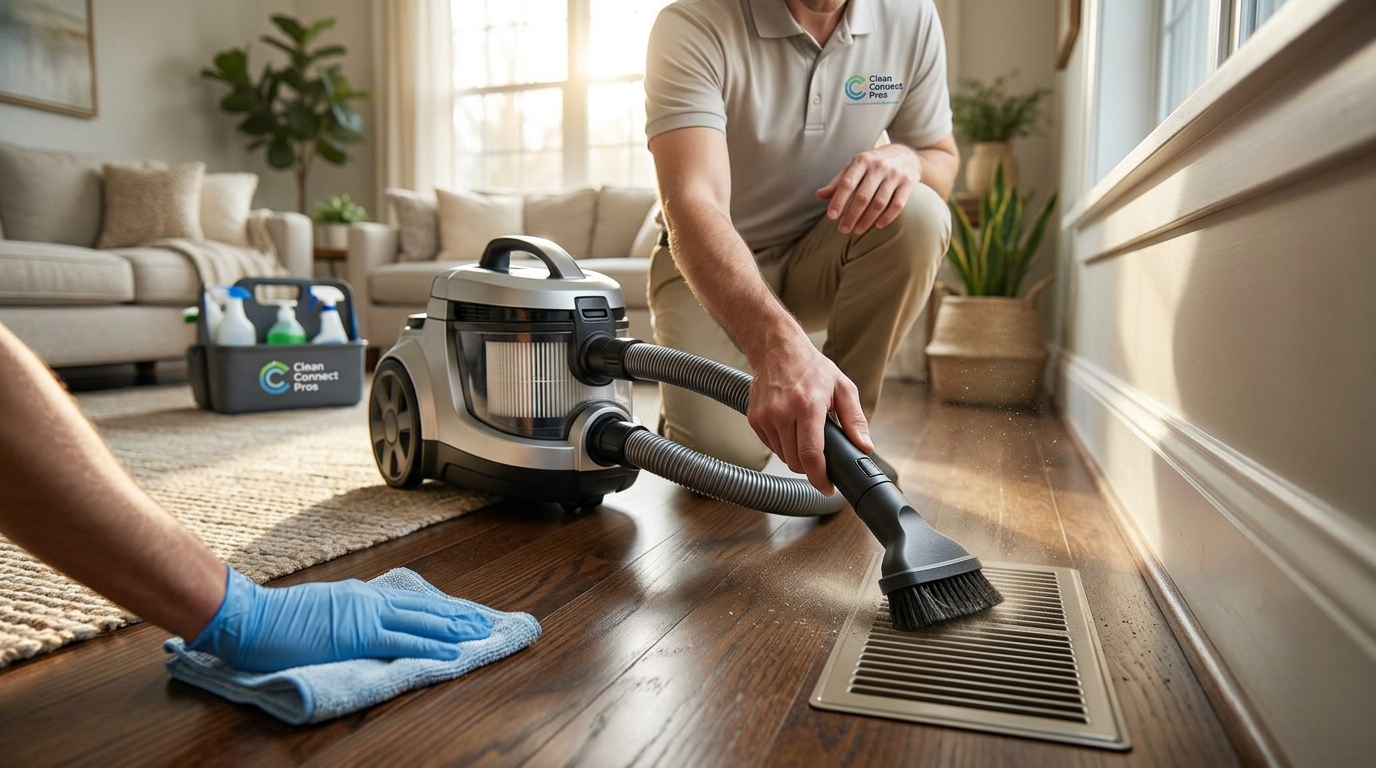
HVAC vents are the primary source of fine dust in any building. Air conditioning systems pull air through filters, but they do not capture every particle. Over time, fine dust accumulates in the vent grilles and ductwork. When you vacuum a vent with a standard nozzle, the suction can push fine dust deeper into the ducts or blow it back into the room. A HEPA vacuum with a soft brush attachment gently lifts dust from the grille without agitating it into the air.
Technique for Effective Vent Cleaning
To clean vents effectively, start with the power off. Use a soft brush attachment to gently sweep dust from the grille. Then, use the vacuum nozzle to suction the dust from the center of the grille outward. This technique prevents dust from being pushed into the ductwork. For interior surfaces like baseboards and crown molding, use a crevice tool with a HEPA filter. The suction pulls dust from the seams where it accumulates, and the filter traps it.
Microfiber Wiping for Flat and Non-Porous Surfaces
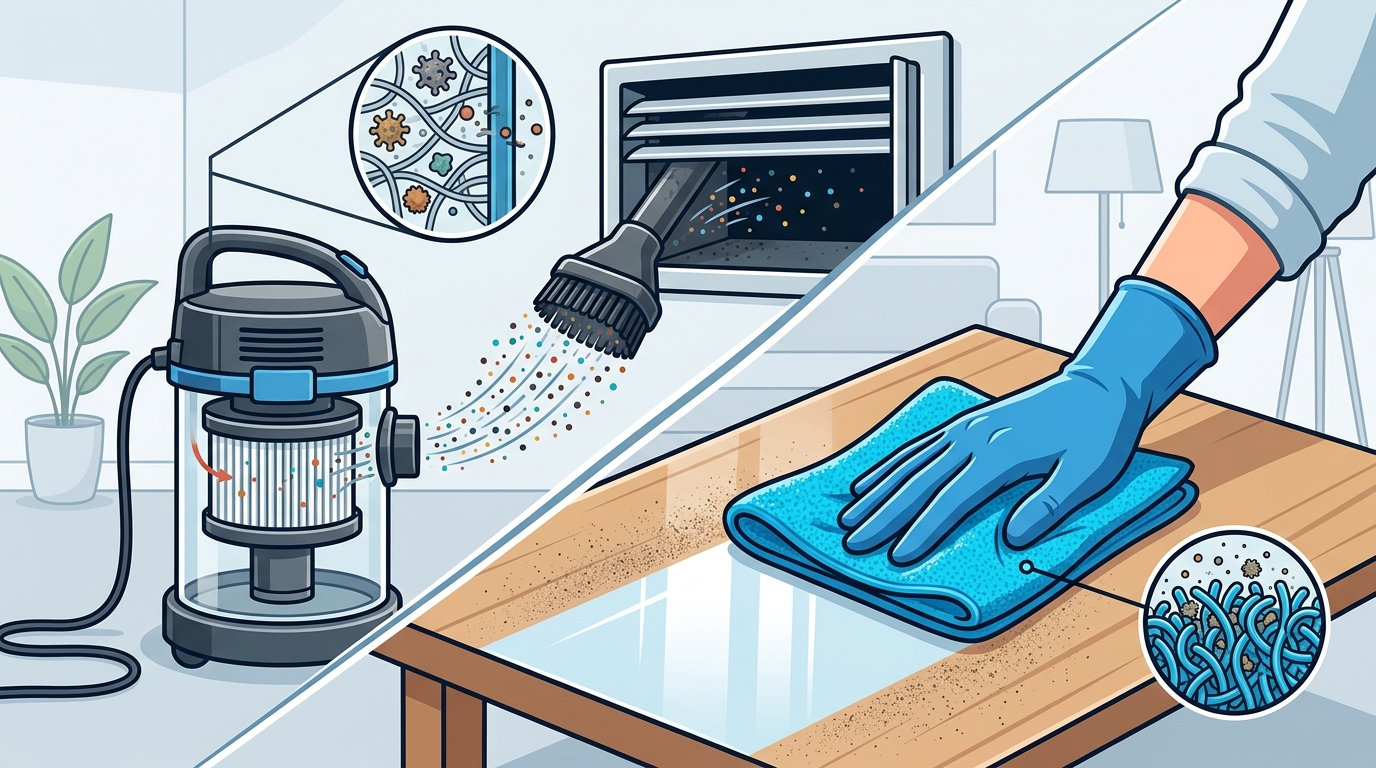
Microfiber wiping is a cleaning method that uses synthetic fibers with a split structure to trap and hold dust, dirt, and debris. Unlike cotton cloths, which push dust around, microfiber fibers are smaller than a human hair. This structure allows the cloth to grab particles and hold them inside the fabric. Microfiber is the best tool for flat, non-porous surfaces like glass, countertops, and painted walls.
Why Microfiber Beats Cotton
Cotton cloths are often used for dusting, but they are ineffective for fine dust. Cotton fibers are larger and tend to push dust across surfaces rather than trapping it. This leaves a fine layer of dust behind, which can settle back onto furniture. Microfiber, on the other hand, has a static charge that attracts dust. The split fibers create a web that traps particles, keeping them from escaping back into the air.
Technique for Effective Surface Cleaning
To wipe surfaces effectively, use a dry microfiber cloth for dusting. Do not use cleaning sprays for dry dusting, as they can leave a residue that attracts more dust. Wipe in a single direction, starting from the top of the surface and moving down. This prevents dust from falling onto areas you have already cleaned. For glass and mirrors, use a damp microfiber cloth to remove smudges and fine dust. Then, buff with a dry cloth for a streak-free finish.
HEPA vs Microfiber: A Practical Comparison
Choosing between HEPA vacuuming and microfiber wiping depends on the surface type and the size of the particles. The table below summarizes the best use cases for each method.
| Method | Best For | Particle Size | Key Advantage |
|---|---|---|---|
| HEPA Vacuuming | Vents, baseboards, textured walls, carpets | 0.3 microns and larger | Traps particles at the source, prevents recirculation |
| Microfiber Wiping | Glass, countertops, painted walls, flat furniture | All sizes, including fine dust | Static charge attracts and holds dust, no residue |
For a comprehensive cleaning routine, use both methods. Start with HEPA vacuuming to remove loose dust from vents and textured surfaces. Then, use microfiber wiping to clean flat surfaces. This two-step approach ensures that fine dust is removed from every part of the room.
Key Takeaways
- HEPA vacuuming is the most effective method for removing fine dust from vents and porous surfaces.
- Microfiber wiping is the best choice for flat, non-porous surfaces like glass and countertops.
- Standard vacuum filters often let fine dust escape, which is why HEPA filtration is essential.
- Cotton cloths push dust around, while microfiber traps it with a static charge.
- Always turn off HVAC systems before vacuuming vents to prevent dust from being pushed into ducts.
- Use a dry microfiber cloth for dusting and a damp cloth for glass and mirrors.
- Combine both methods for a truly dust-free home or office.
- Professional cleaning services in the DMV and Central Virginia region use both methods for optimal results.
Frequently Asked Questions
What is the difference between a HEPA filter and a standard vacuum filter?
A HEPA filter captures 99.97% of particles as small as 0.3 microns, while a standard filter captures larger particles but lets fine dust escape. This makes HEPA filters essential for removing fine dust from vents and interior surfaces.
Can I use a standard vacuum to clean HVAC vents?
You can, but it is not recommended. A standard vacuum may push fine dust deeper into the ductwork or blow it back into the room. A HEPA vacuum with a soft brush attachment is the safer and more effective choice.
Do I need to use cleaning sprays with microfiber cloths?
No, you do not need cleaning sprays for dry dusting. Use a dry microfiber cloth to trap dust. For glass and mirrors, use a damp cloth to remove smudges, then buff with a dry cloth.
How often should I clean vents and interior surfaces?
Clean vents every 3 to 6 months, depending on your HVAC usage and local air quality. Dust interior surfaces weekly to prevent fine dust from accumulating. In high-traffic areas, you may need to dust more frequently.
Is microfiber better than cotton for dusting?
Yes, microfiber is better than cotton for dusting. Cotton pushes dust around, while microfiber traps it with a static charge. This makes microfiber more effective for removing fine dust from flat surfaces.
Can I use the same microfiber cloth for all surfaces?
It is best to use separate cloths for different areas. Use one cloth for dusting, one for glass, and one for bathrooms. This prevents cross-contamination and ensures that each surface is cleaned effectively.
Does Clean Connect Pros use HEPA vacuums and microfiber cloths?
Yes, Clean Connect Pros uses HEPA vacuums and microfiber cloths as part of their premium cleaning services. This ensures that fine dust is removed from vents and interior surfaces in homes and offices across the DMV and Central Virginia region.
What is the best way to clean a textured wall?
Use a HEPA vacuum with a soft brush attachment to gently lift dust from the texture. Then, use a dry microfiber cloth to wipe any remaining dust from flat areas. This two-step approach ensures that fine dust is removed from every part of the wall.
Conclusion
Removing fine dust from vents and interior surfaces requires the right tools and techniques. HEPA vacuuming is the best method for vents and porous surfaces, while microfiber wiping is ideal for flat, non-porous surfaces. By combining both methods, you can achieve a truly dust-free environment. Clean Connect Pros brings this expertise to homes and offices across the DMV and Central Virginia region. Our insured and bonded team uses premium tools and eco-friendly products to ensure that your space is spotless. To schedule a cleaning service, contact Clean Connect Pros today.