HEPA vacuuming and microfiber wiping are the two most effective methods for removing fine dust from vents and interior surfaces. HEPA filtration captures airborne particles, while microfiber traps settled dust through static charge. This guide explains how Clean Connect Pros uses both techniques to ensure a truly clean environment across the DMV and Central Virginia. For additional details, review the .
Understanding Fine Dust
Clean Connect Pros recognizes that effective cleaning requires more than just surface wiping. Our teams in Washington, DC, Maryland, and Northern Virginia are trained to address both airborne and settled dust. By understanding the nature of fine dust, we can apply the right method to each surface. This approach ensures that your space feels fresh and remains healthy for everyone who uses it. For additional details, review the Customer Experience.
HEPA Vacuuming
The Role of Suction and Filtration
Vent and Grille Cleaning
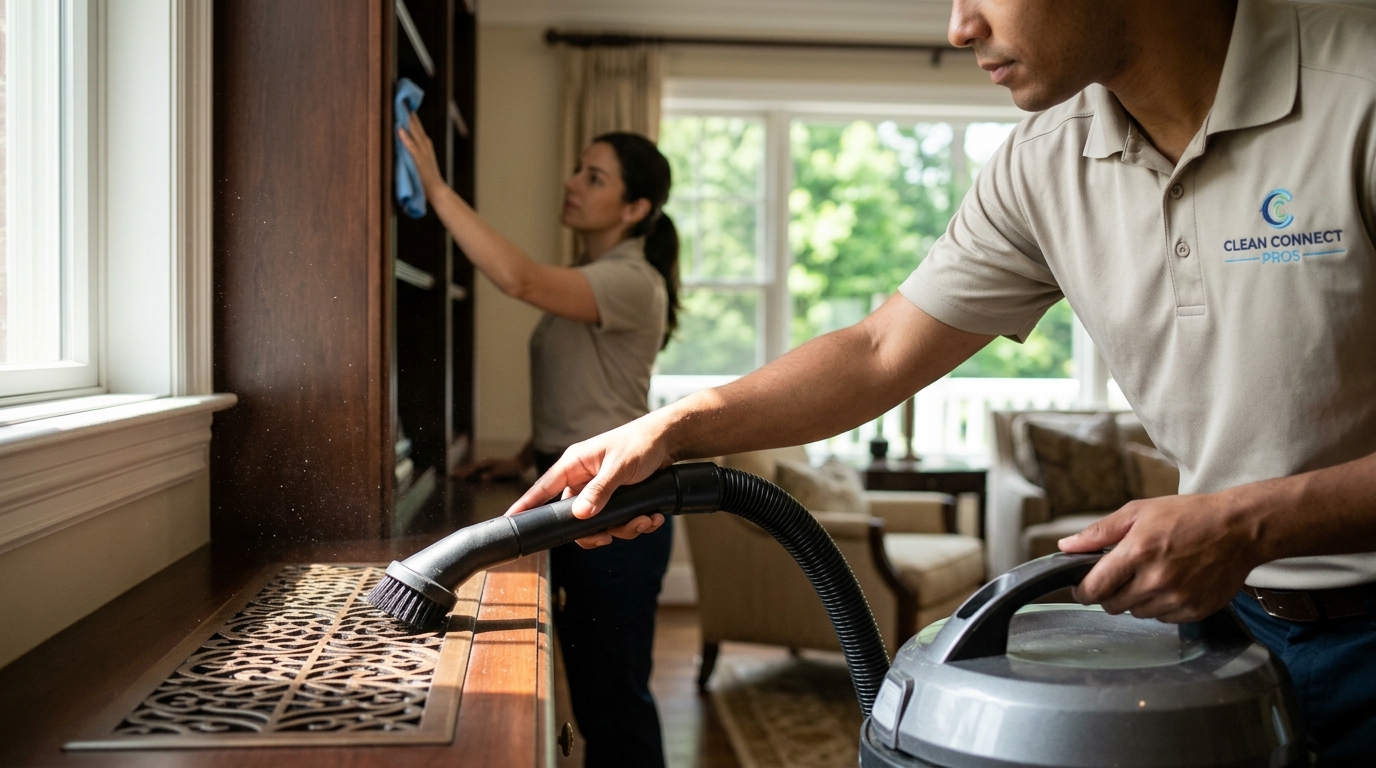
Heating and cooling vents are prime collectors of fine dust. Over time, dust builds up inside the ductwork and on the grilles. Vacuuming these areas with a HEPA filter and a soft brush attachment helps remove loose particles. This step is essential for maintaining indoor air quality. Our technicians carefully clean vents to prevent dust from settling back onto nearby surfaces. For additional details, review the Frequently Asked Questions.
Microfiber Wiping
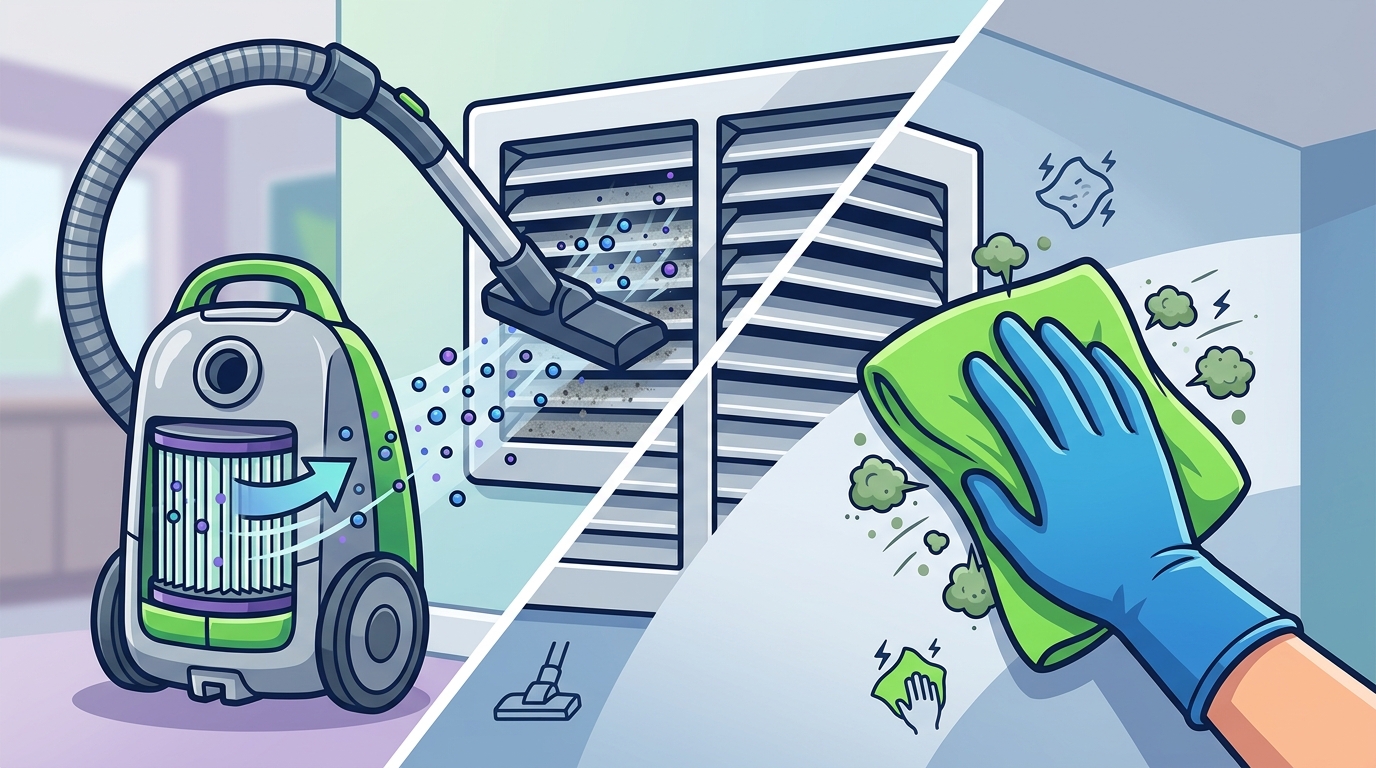
Microfiber wiping is a dry or damp cleaning technique that uses synthetic fibers to trap dust and debris. Microfiber cloth is a material made of extremely fine synthetic fibers that create a static charge. This charge attracts and holds fine dust particles that would otherwise be pushed around by traditional cloths. Unlike cotton or paper towels, microfiber does not shed lint or leave behind residue. This makes it ideal for sensitive surfaces like electronics, glass, and painted walls. For additional details, review the About.
Why Microfiber Beats Traditional Cloths
Traditional cotton cloths often push dust across surfaces rather than lifting it away. This can leave a hazy film that looks clean but is actually dirty. Microfiber fibers are smaller than a human hair, allowing them to reach into crevices and textured surfaces. When you wipe with microfiber, the dust is locked into the weave of the cloth. This ensures that the surface is truly free of fine particles.
Proper Technique for Interior Surfaces
To get the best results, use a clean microfiber cloth for each surface. Wiping in a consistent direction helps lift dust effectively. For vents and grilles, a dry microfiber cloth is often sufficient to remove settled dust. For sticky or greasy areas, a lightly dampened cloth can be used. Clean Connect Pros trains its staff on these techniques to ensure consistent, high-quality results. This attention to detail is part of our satisfaction guarantee.
Method Comparison
Choosing between HEPA vacuuming and microfiber wiping depends on the surface and the type of dust. The table below summarizes the strengths of each method.
| Best For | Carpets, upholstery, vents, large areas | Flat surfaces, electronics, glass, detailed work |
| Dust Capture | Traps particles inside the machine | Traps particles in the cloth weave |
| Air Quality Impact | Prevents recirculation of fine dust | Removes settled dust without creating airborne particles |
| Maintenance | Requires regular filter cleaning or replacement | Requires washing cloths after each use |
| Surface Safety | Safe for most fabrics and hard floors | Safe for delicate and sensitive surfaces |
Both methods are complementary. A professional cleaning service will use both to achieve a comprehensive result. Clean Connect Pros integrates these techniques into every service, from residential deep cleans to commercial maintenance. This dual approach ensures that no fine dust is left behind.
Key Takeaways
- HEPA vacuuming captures 99.97% of fine particles, preventing them from recirculating in the air.
- Vents and grilles require both vacuuming and wiping to remove all settled dust.
- Standard vacuum cleaners often fail to capture fine dust, leading to ongoing indoor air quality issues.
- Microfiber cloths must be washed after each use to maintain their dust-trapping ability.
- Clean Connect Pros uses professional-grade HEPA vacuums and microfiber tools for all services.
- Combining both methods provides the most effective solution for removing fine dust from any space.
- Regular professional cleaning helps maintain indoor air quality and reduces allergen buildup.
Frequently Asked Questions
What is the difference between HEPA and standard vacuum filters?
HEPA filters capture 99.97% of particles as small as 0.3 microns, while standard filters often let fine dust escape back into the air. This makes HEPA vacuums far more effective for allergy sufferers and those sensitive to indoor air quality.
Can I use microfiber cloths for all surfaces?
Yes, microfiber is safe for most surfaces, including glass, wood, and electronics. However, you should use a clean cloth for each surface to avoid transferring dirt or chemicals from one area to another.
How often should I clean my vents for dust removal?
It is recommended to clean vents every 3 to 6 months, depending on your environment. Homes with pets or high traffic may need more frequent cleaning. Clean Connect Pros includes vent cleaning in many of our deep clean packages.
Do I need to wash microfiber cloths after every use?
Yes, microfiber cloths should be washed after each use to remove trapped dust and debris. Using a dirty cloth can push old dust back onto your surfaces, defeating the purpose of the cleaning.
Is HEPA vacuuming necessary for hard floors?
While hard floors can be cleaned with a microfiber mop, using a HEPA vacuum is still beneficial for removing fine dust from cracks and edges. It ensures that no particles are left behind to be tracked around the room.
How does Clean Connect Pros ensure dust is not recirculated?
We use sealed HEPA vacuum systems and proper wiping techniques to ensure that dust is captured and removed. Our teams are trained to work in a way that minimizes airborne particles during the cleaning process.
Conclusion
Removing fine dust from vents and interior surfaces requires a combination of HEPA vacuuming and microfiber wiping. Each method has its strengths, and using them together provides the most thorough clean. Clean Connect Pros brings this expertise to homes and businesses across the DMV and Central Virginia. Our insured and bonded teams are dedicated to delivering a clean, healthy environment for you and your family. To experience the difference of professional-grade dust removal, contact Clean Connect Pros today for a free quote.